Sedation Dentistry for Children | Songbird Pediatric Dentistry
Keeping Your Child Safe With Sedation Dentistry
When your child is sedated, the question that matters most to you is whether they're safe. Depending on your child's treatment needs and medical history, Dr. Petrik will recommend the option that's right for them: nitrous oxide, in-office sedation, or hospital sedation at Ann and Robert H. Lurie Children's Hospital. At Songbird Pediatric Dentistry, no matter the setting, your child's safety is always the top priority.
Your child's vital signs are monitored continuously: heart rate, oxygen levels, and breathing, from the moment sedation begins until they're fully recovered. This isn't a glance now and then. A trained anesthesia professional stays focused on your child the whole time. Our care is built around three stages:
- Before: a health review to confirm your child is a good candidate that day, including any recent illness or change in how they're feeling
- During: continuous monitoring alongside the dental work, with the team ready to respond right away if anything shifts
- After: a recovery period at the office before your child is cleared to head home, plus clear notes on what to watch for once you're back in your own space
Our team is trained specifically in pediatric sedation. Children aren't small adults, and their care calls for a different kind of attention, which shapes how every one of these appointments is staffed and run.
What to Know First
- Nitrous oxide is our most common option and works well for kids who are mildly to moderately anxious. It clears within minutes, so there's no long recovery at home.
- In-office sedation is available for more involved treatment or for anxiety that lighter approaches won't ease.
- For cases that need it, hospital sedation at Ann and Robert H. Lurie Children's Hospital is available for children with a medical condition that requires specialized care to ensure a safe procedure.
- Your child's heart rate, oxygen, and breathing are watched continuously during any sedation appointment.
- You'll be kept in the loop before, during, and after, with clear guidance for once you're home.
- Ask us which option fits your child's age, medical history, treatment needs, and temperament; a consultation with Dr. Erin Petrik sorts that out.
How Sedation Works at Our Office
Once we've settled on the right option together, here's what the day actually looks like for your child.
Nitrous Oxide
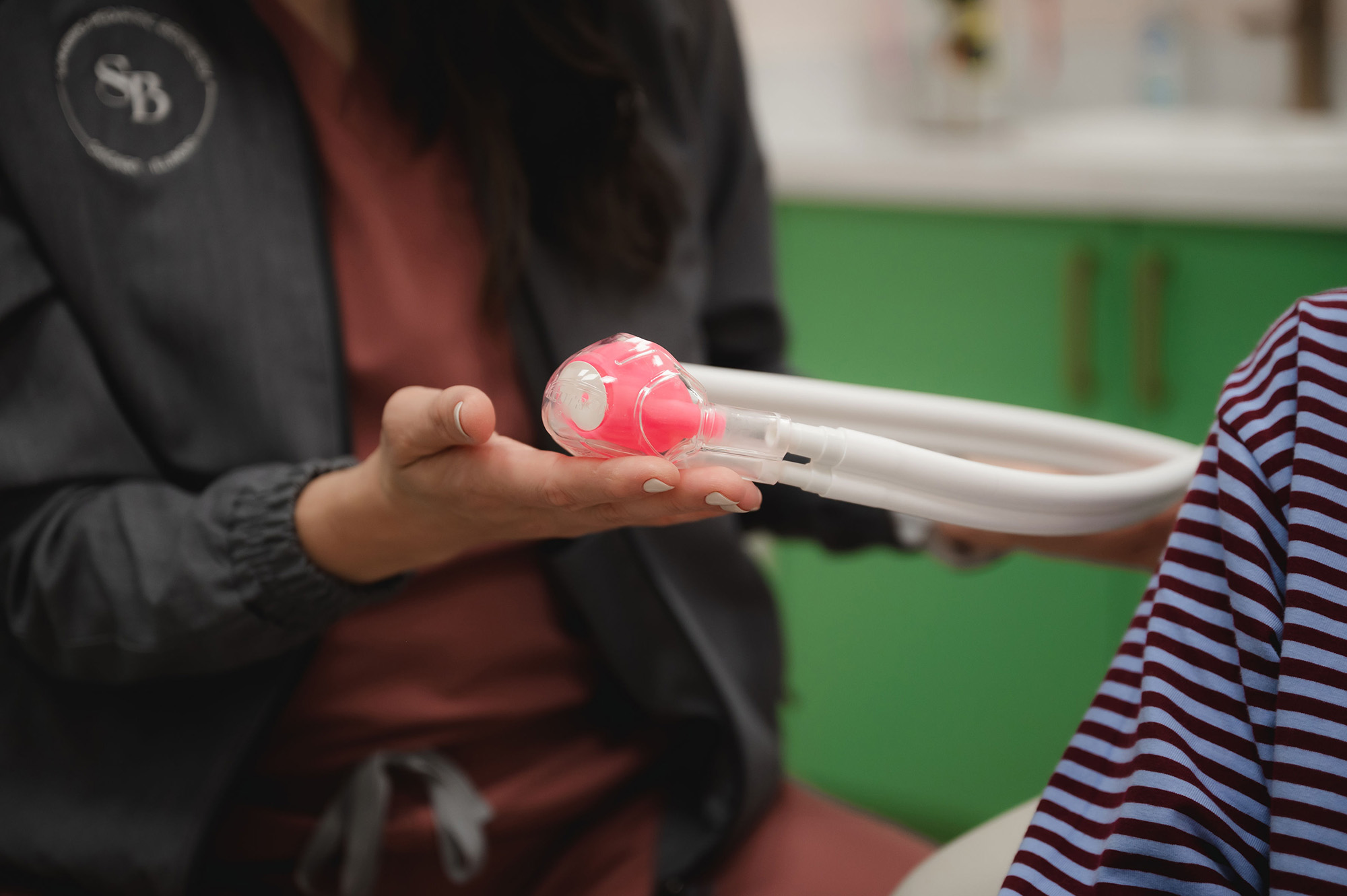
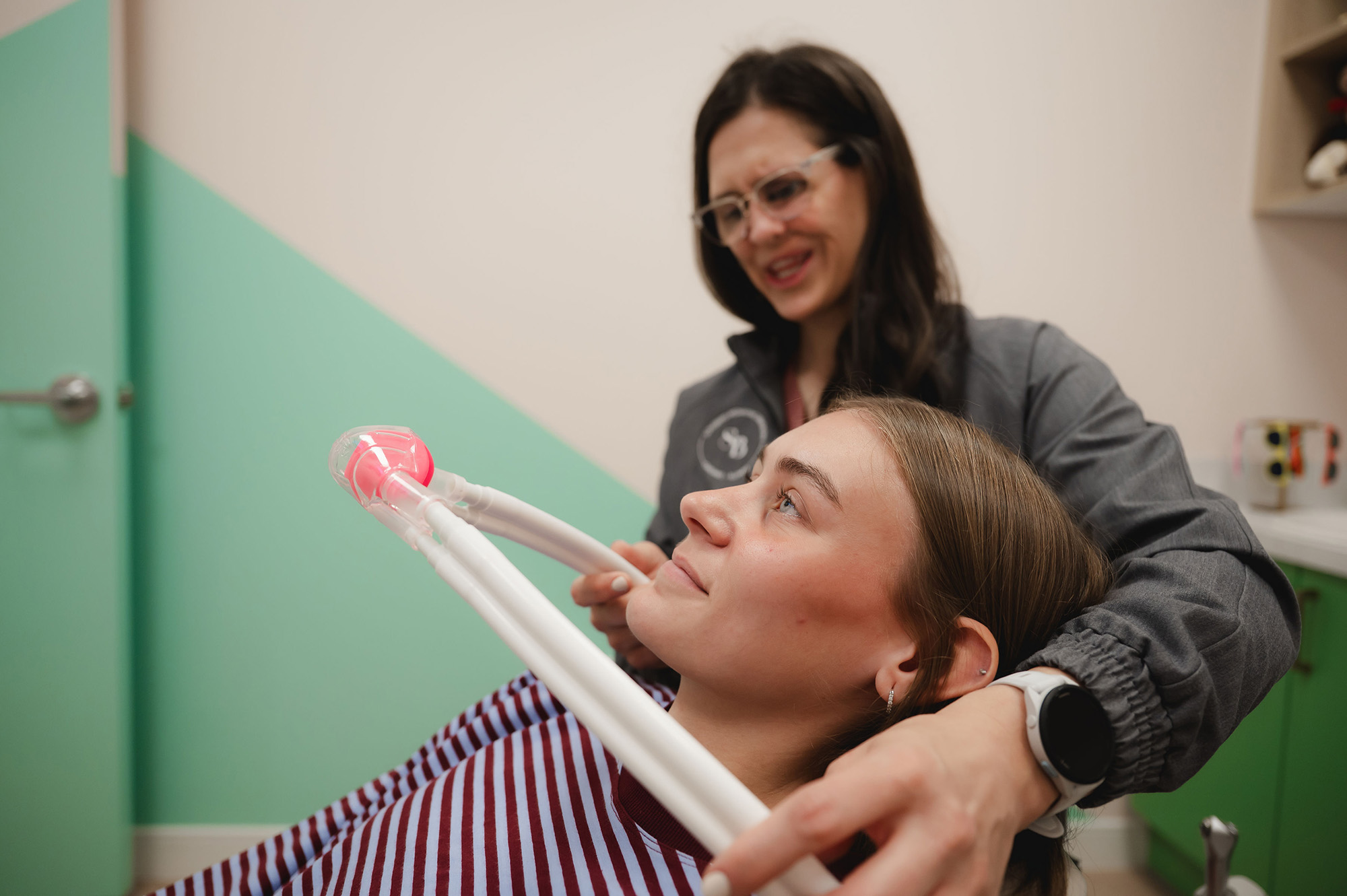
Nitrous oxide is a commonly used and gentle option to help your child feel more comfortable and at ease. A small, comfortable mask rests over your child's nose, and they just breathe normally.
Within a few minutes, most children feel warm, relaxed, and a little floaty. They stay awake the whole time, hear us talking to them, and can answer back.
When we're done, the mask comes off, we give a few minutes of pure oxygen, and the nitrous clears fast. No grogginess, no nap on the ride home.
In-Office Sedation
In-office sedation is available for more involved procedures, or for children whose anxiety makes a comfortable visit hard to reach any other way. It brings a deeper level of calm and is always delivered alongside trained anesthesia professionals, with your child's comfort and safety tracked the entire time.
Dr. Erin Petrik will walk you through exactly what this looks like for your child at your consultation, based on their age, health history, and what treatment is planned.
Hospital Sedation at Lurie
For cases that need it, Dr. Erin Petrik holds operating room privileges at Ann and Robert H. Lurie Children's Hospital. This setting is available for complex cases or children with medical conditions that require specialized care to ensure a safe procedure, and is handled by a team of anesthesia professionals in a fully equipped hospital environment.
Whichever option your child receives, you're not left guessing. We talk you through what to expect beforehand, keep you posted during the appointment, and go over exactly what happened and what to do at home before you leave.
Why Families Consider Sedation
Sedation isn't only for the toughest cases, and it's never about taking a shortcut. It's a tool that lets a child get the care they need while staying calm and comfortable. The real benefits show up in how your child experiences the visit:
- Calmer visits. A nervous child can relax enough to let us actually help them, without the fight that leaves everyone shaken.
- Fewer appointments. Several treatments can often be finished in a single visit, which means less time in the chair overall and less repeated stress.
- Care that stays gentle. A strong gag reflex or wiggly little body no longer stands in the way of thorough, careful work.
- A better long-term relationship with the dentist. When a visit goes smoothly instead of scary, your child is more likely to feel comfortable coming back.
- Peace of mind for you. You know your child is being watched closely and cared for the whole time.
Which Kids Are Good Candidates?
Every child is different, so candidacy is confirmed one-on-one. Still, sedation tends to make a real difference for:
- Children with significant dental anxiety, including toddlers who won't open their mouths no matter how gently we approach
- Children with a medical condition that requires specialized care, who can be treated safely at Lurie Children's Hospital
- Very young children who aren't developmentally ready to sit still through a longer procedure
- Kids with a strong gag reflex that makes routine care genuinely hard
- Children who need several treatments completed together, sparing them repeated trips
Sometimes sedation isn't the first step. Plenty of children who resist at the start do beautifully once they've had time to warm up to the room and the team.
If that's your child, we'll say so, and we'll try the gentler path before anything else. Age, health history, and the treatment planned all help us decide together what's genuinely right for your little one.
Keeping Your Child Safe
When your child is sedated, the question that matters most to you is whether they're safe. Here's what actually happens in the room.
Your child's vital signs are monitored continuously: heart rate, oxygen levels, and breathing, from the moment sedation begins until they're fully recovered. This isn't a glance now and then. A trained team member stays focused on your child the whole time. Our care is built around three stages:
- Before: a health review to confirm your child is a good candidate that day, including any recent illness or change in how they're feeling
- During: continuous monitoring alongside the dental work, with the team ready to respond right away if anything shifts
- After: a recovery period at the office before your child is cleared to head home, plus clear notes on what to watch for once you're back in your own space
Our team is trained specifically in pediatric sedation. Children aren't small adults, and their care calls for a different kind of attention, which shapes how every one of these appointments is staffed and run.
Getting Ready and Recovering
Because needs vary, we'll walk you through the exact prep for your child at the consultation. Here's the general shape of it so you can plan ahead.
For nitrous oxide, prep is simple. A light meal beforehand is usually fine, and recovery is quick, so your child can head right back into their regular day.
In-office sedation asks for a bit more planning, and we'll make sure you feel fully informed before the day arrives:
- Fasting instructions specific to your child, provided at your consultation
- A parent or caregiver present for the whole appointment and the ride home
- A quieter afternoon afterward so your child can rest comfortably
Nothing about this should catch you off guard. If a question comes up before your visit, we're happy to talk it through. Give us a call at (773) 466-2440 or reach out to our team, and Dr. Erin Petrik will make sure you feel ready.
Cost, Insurance, and Payment For Sedation Dentistry
What you'll pay depends on two things: the type of sedation used and how involved the procedure is. Nitrous oxide is generally the more accessible option, while deeper sedation carries additional considerations that affect the estimate.
Some insurance plans reimburse families for pediatric dental care, including nitrous oxide when it's medically indicated, though coverage varies plan to plan. We're glad to help you understand your own benefits so you're working from a clear picture rather than a guess.
A few things that shape your estimate:
- The sedation method recommended for your child's age, temperament, and procedure
- location and type of sedation needed
You'll get a specific estimate at the consultation, based on your child's actual treatment needs, and we'll go over payment options with you then. Cost shouldn't be the thing standing between your child and care that feels good to them.
Why Neighborhood Families Choose Songbird
Parents around Bucktown, Logan Square, Wicker Park, Lincoln Park, Avondale, Humboldt Park, and West Town tend to do their homework. If you're one of them, you're probably not just looking for the closest office; you're looking for a practice that truly understands children, not only their teeth.
Dr. Erin Petrik is a board-certified pediatric dentist with specialized training in sedation and craniofacial care, and she holds operating room privileges at Ann and Robert H. Lurie Children's Hospital of Chicago. That range matters when your child's needs go beyond a routine visit. Whatever the situation calls for, we have the training and the relationships to handle it well.
We also take the time that most offices don't. Appointments here aren't rushed. We get to know your child, move at a pace that works for them, and make sure you leave with a clear picture of what happened and what comes next. Your child is known by name here, not by a chart number.
Frequently Asked Questions Parents Ask Us About Sedation
Is nitrous oxide safe for toddlers and young children?
Yes. Nitrous oxide has a long, well-established safety record in pediatric dentistry and is the most conservative sedation option available for young children. We carefully adjust it to your child's size and how they respond throughout the appointment. If you have questions about whether it's right for your little one, reach out to our team anytime.
Will my child be asleep during nitrous oxide?
No. Nitrous oxide is a mild inhaled sedative, not general anesthesia. Your child stays awake, responsive, and breathing on their own. Most kids describe feeling relaxed, a little floaty, or simply calm.
My child refuses to open her mouth at the dentist. Is sedation the answer?
Sometimes, but not always. Many children who resist at first do wonderfully once they've had a chance to warm up to the room and the team. Sedation is one tool among several, and we'll talk through the whole picture with you before suggesting it.
How long does nitrous oxide take to wear off?
It clears quickly. Once we turn it off, we deliver pure oxygen for a few minutes, and most children are back to their normal selves before they leave. There's no lingering grogginess.
What's the difference between nitrous oxide and other sedation options?
Nitrous oxide is inhaled, mild, and wears off almost right away. In-office and hospital sedation allow your child to be sleeping during the procedure. The two involve different preparation, monitoring, and recovery.
Do I need a separate consultation before a sedation appointment?
For nitrous oxide, a conversation at your child's regular visit is usually enough. For deeper sedation, a dedicated consultation lets us review your child's health history, answer every question, and plan the appointment down to the details.
Let's Make the Next Visit an Easier One
Helping nervous kids become confident ones is genuinely our favorite part of the job, and we do it every single day. Whether your child needs a routine checkup or you're weighing sedation, we'll take it at whatever pace feels right for your family and answer everything on your list.
When you're ready, call us at (773) 466-2440. We're at 2423 W Fullerton Ave in Chicago, and we'd love to meet your family.
Find Us
Find Parking
Free street parking is available on the south side of Fullerton Ave and on Campbell Ave. Metered street parking is available on the north side of Fullerton Ave.